How Live Option Buying Works in Nifty, Bank Nifty and Sensex During the 2026 Expiry Week
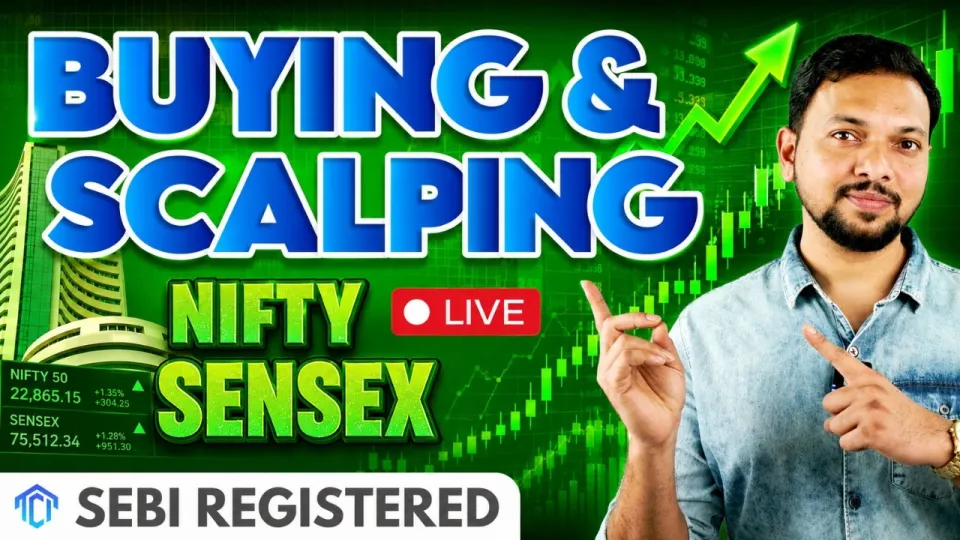
Video: LIVE TRADING Nifty BankNifty and SENSEX | Option Buying | 15 Oct #livetrading
Need articles like this for your video? They help promote it on YouTube and Google — order them in the Telegram bot @sat_sit_bot. Articles with your video embedded are written and posted by the bot itself — on popular topical sites (no ads). Free trial — 50 articles.
· based on the channel TRADING CAFE INDIA
Live option buying on Nifty, Bank Nifty and Sensex is intraday trading of index call and put options while the market is open, where the trader picks a strike, a direction and an exit rule before the entry. It is the format the TRADING CAFE INDIA live session on 15 October builds around: three Indian indices, one screen, and option buying rather than option selling. If you want the broker and research side of that setup, the Lemonn registration link from the stream is the starting point.
What live option buying actually means for an index trader
Live option buying is a directional bet with a defined, prepaid cost: you pay a premium and that premium is the maximum you can lose on the trade. Nifty, Bank Nifty and Sensex options are European-style and cash-settled, so there is no assignment of shares and no delivery risk — the position is squared off in cash through the exchange. That makes index options the most liquid derivatives in India and the reason a live session can move between the three indices without leaving the screen.
The trade has four moving parts, and all four must be decided before the entry:
- Direction — call or put, based on where the index is relative to the previous day's range and the opening balance.
- Strike — usually at the money or one strike away, because that is where delta is highest and theta damage is moderate.
- Size — how many lots the account can lose on twice without breaking the daily limit.
- Exit — a fixed premium stop and a target, or a time-based exit before the last hour of the session.
How strike selection changes the risk on Nifty and Bank Nifty
Strike selection decides how much of the index move you actually capture. A near-the-money option moves roughly with the index, while a far out-of-the-money strike costs little but needs a large move to pay. Traders who buy the cheapest strike on the chain often watch the index go their way and still lose, because the premium bleeds as expiry approaches.
A practical way to think about it:
- At the money: highest sensitivity to the index, highest premium, tightest stop in rupee terms.
- One or two strikes away: cheaper, still responsive, needs a slightly bigger move to work.
- Deep out of the money: lottery ticket; the probability of a full loss is very high.
- Expiry day: theta is at its most aggressive, so even a correct direction can lose money if the move is slow.
On Bank Nifty, whose point value is larger and whose swings are wider, the same premium outlay buys fewer lots than on Nifty. That is why position sizing cannot be copied from one index to another.
Reading the three indices in one live session
Nifty, Bank Nifty and Sensex rarely move in perfect sync, and that divergence is itself information. Bank Nifty is driven by banking heavyweights and is usually the most volatile of the three; Sensex carries a similar large-cap mix with a different weighting; Nifty is the broadest and often the calmest. When Bank Nifty leads and Nifty lags, the move is bank-specific rather than market-wide.
A workable live routine looks like this:
- Mark the previous day's high and low on all three indices before the open.
- Note whether the market opened inside or outside that range.
- Trade the index that is showing the cleanest structure, not the one you happen to like.
- Keep one position at a time until the first trade is closed — three correlated long positions is one position with triple the risk.
Viewers in the stream's comments kept asking for Nifty levels while the discussion sat on Sensex, and one noted that the index had already run to a high price on the day. That is the classic live-session problem: by the time a level is quoted aloud, the move is often already done.
Position sizing and the loss that ends the day
Position sizing is the only risk control that survives a wrong call. A trader in the comments reported losing 13,000 rupees in a single session — on a small account that is not bad luck, it is a sizing failure, because no single index option trade should be able to remove that much capital. The rule is simple: decide the maximum daily loss in rupees first, then work backwards to lot size.
A few hard constraints help:
- Cap the daily loss at a fixed percentage of capital and stop when it is hit.
- Risk no more than a small fraction of capital on one premium outlay.
- Do not average down on a losing option — adding to a losing position multiplies the loss, it does not lower the entry.
- Keep a cash buffer, because option buying allows many entries per day and overtrading is the quiet killer.
Holding a position overnight is a separate decision. Index options can be carried, but the premium decays through the close, and a gap against you is priced in full at the next open.
Common questions from live trading rooms
Most doubts in a live index-option session fall into a few recurring buckets, and they are worth answering before the market opens rather than during it.
"Where are the Nifty levels?" — Levels belong to the plan, not to the chat. Mark them yourself from the previous session's high, low and close, and treat any level quoted mid-move as information, not an instruction.
"Can I hold this call?" — Only if the trade was planned as a positional trade with a wider stop. A trade entered as an intraday scalp that is held after the target fails turns a small loss into an unplanned overnight risk.
"Will Sensex reach a round number?" — Round-number targets are useful as reference points, not as forecasts. A specific index level is a scenario, and the premium you paid is what you actually own.
"Why did the index rise and my option not move?" — Check the strike distance and the time left to expiry. Slow, grinding moves into expiry can leave a far strike flat even when the index closes higher.
The educational and regulatory side of following live calls
Following live trading content is education, not a substitute for a licence or a plan. TRADING CAFE INDIA states SEBI registration INH000013767 as a research analyst and labels its video content as educational; SEBI registration does not guarantee performance or returns. The stream also promotes offshore brokers and crypto platforms, and the channel's own disclaimer notes that trading pairs without the rupee or using brokers not registered in India is restricted under FEMA — so Indian residents should check what they are actually allowed to use before signing up anywhere.
Treat any live call as a worked example: note the entry, the stop, the reason, and then check what you would have done without the narration.
Useful links from the session
- Lemonn registration for SEBI-registered calls
- Nifty and Sensex VIP setups
- Free Telegram channel for trades and BTST news
- XM broker link from the stream
- CoinSwitch Pro signup for crypto and gold calls
Final takeaway
Live option buying on Nifty, Bank Nifty and Sensex rewards preparation far more than reaction: pick the strike before the open, size the trade so a single loss cannot end the week, and accept that a correct direction with the wrong strike still loses money. The 15 October session from TRADING CAFE INDIA is a useful case study in how fast three indices can diverge inside one trading day. Use it to build your own checklist rather than to copy entries. If you want the research side of that workflow, start with the Lemonn registration link and read the risk disclosures before committing capital.
Key takeaways
- Live option buying means entering Nifty, Bank Nifty or Sensex calls or puts intraday while the market is open, not after the close.
- Index options are cash-settled in India, so a position is closed through the exchange, never by delivering shares.
- Strike choice usually sits near the money; deep out-of-the-money strikes are cheap but decay fast.
- A single loss day of 13,000 rupees on a small account is a position-sizing problem, not a market problem.
- Trading Cafe India is a SEBI-registered research analyst (INH000013767) and marks its content as educational.
Questions & answers
Is live option buying on Nifty and Bank Nifty safe for a small account?
It is capped-risk in the sense that the premium paid is the maximum loss on the trade, but that only holds if position size is small relative to capital. A trader who loses 13,000 rupees in one session on a modest account is risking too much per trade. Cap daily loss first, then choose lot size.
Why does my call option lose money when the index goes up?
Two reasons dominate: the strike is too far out of the money, or there is too little time left to expiry. Premium decays as expiry approaches, and a slow grind higher may not be enough to offset that decay on a distant strike.
Can I hold an index option position overnight?
Yes, index options can be carried, but the trade must be planned that way with a wider stop and smaller size. A position entered as an intraday trade and held after its stop is hit turns a controlled loss into unplanned gap risk.
Does a SEBI registration on a trading channel guarantee returns?
No. Registration as a research analyst, such as INH000013767, means the entity is registered with the regulator; it does not assure performance or profits. The channel itself describes its video content as educational, and viewers should verify any advice independently.
Source: LIVE TRADING Nifty BankNifty and SENSEX | Option Buying | 15 Oct #livetrading · Markdown version