Bitcoin and altcoins in the next crypto cycle: which is better to hold and why
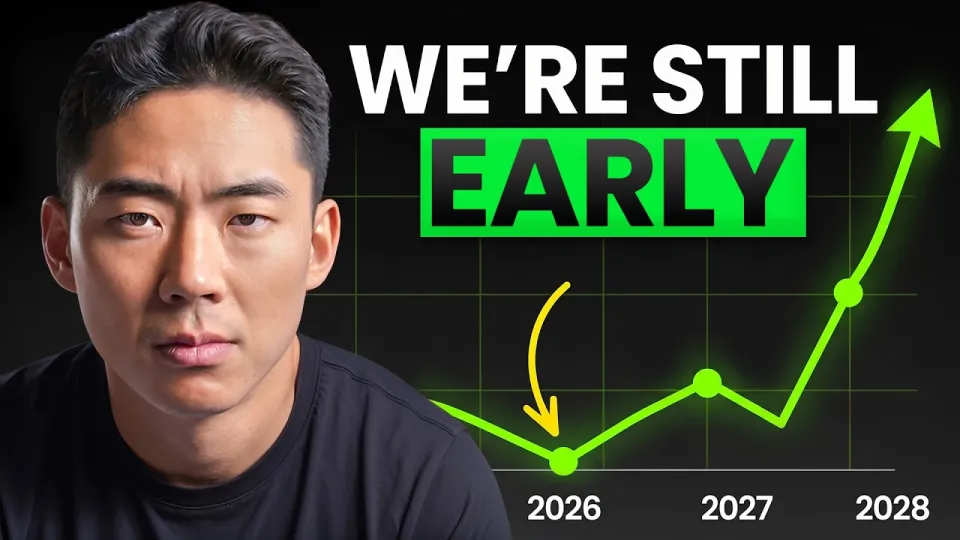
Video: my plan to make millions in crypto 2027
Need articles like this for your video? They help promote it on YouTube and Google — order them in the Telegram bot @sat_sit_bot. Articles with your video embedded are written and posted by the bot itself — on popular topical sites (no ads). Free trial — 50 articles.
· based on the channel Brian Jung
For most people the better answer is a Bitcoin-heavy core with a small, deliberately capped altcoin sleeve, because Bitcoin carries the cleanest institutional demand and the most predictable drawdown behavior, while altcoins offer higher upside only if you size them so a 70–90% drop is survivable. Brian Jung's breakdown 'my plan to make millions in crypto 2027' frames the same trade-off, and his paid research product is available through the Kaizen Pro waitlist.
Why crypto still has a case in this cycle
The bullish case rests on who is buying now, not on how loud the narrative is. Since spot Bitcoin ETFs launched in January 2024, a large share of marginal demand has come through regulated wrappers that pension funds, registered investment advisers and family offices can actually use. That buyer does not use 10x leverage and does not chase a memecoin at 3 a.m.; it allocates on a schedule and rebalances quarterly.
Three structural facts matter more than any single chart:
- Supply issuance is fixed and halved roughly every four years; the April 2024 halving cut new Bitcoin per block from 6.25 to 3.125.
- Exchange-traded access exists in the largest capital market in the world, which removed the custody objection for a whole class of allocators.
- Stablecoins have become real payment and settlement infrastructure, with hundreds of billions in circulation, which keeps onchain activity alive even in flat markets.
None of that guarantees price direction. It does mean the asset class now has a durable institutional floor of interest that did not exist in 2017 or 2019.
The narratives that actually move altcoins
Altcoin returns come from narrative rotation, and rotation is faster and more brutal than most people expect. In practice, three themes have carried the most weight in recent cycles and are the ones to track in 2026:
- Real-world asset tokenization. Tokenized treasuries and money-market funds grew from near zero to tens of billions in a couple of years, led by issuers such as BlackRock's BUIDL and Franklin Templeton's BENJI. Tokens tied to this theme need actual assets under management, not a whitepaper.
- AI-adjacent crypto infrastructure. Decentralized compute, data provenance and payment rails for autonomous agents attract capital because the AI trade is the dominant equity narrative. Be careful: most tokens in this bucket have weak revenue.
- Consumer onchain apps. Low-fee chains and apps with real daily users, including the Sui ecosystem and similar high-throughput networks, get attention when fees are cheap and onboarding is simple.
A narrative is only investable when you can name the revenue or the user growth behind it. If the only argument is 'it went up last time', that is a trade, not a thesis.
How to build a crypto portfolio that survives a drawdown
Position sizing decides your outcome more than coin selection does. A workable structure for a retail account looks like this:
- Core, 50–70%: Bitcoin, held in self-custody or a regulated custodian. This is the part you do not touch during a 30% correction.
- Large-cap alts, 15–25%: Ethereum and one or two liquid networks with real fee revenue. Cap any single name at 10% of the portfolio.
- High-conviction narratives, 10–15%: three to five tokens across tokenization, AI infrastructure and consumer apps. Assume each can go to zero.
- Dry powder, 5–10%: stablecoins held for forced capitulation, not for yield farming at 40% APY on an unaudited protocol.
The test is simple: add up the altcoin sleeve and ask whether losing all of it changes your life. If yes, cut it in half. The most-liked doubt under cycle-plan videos is that the same bullish script ran in 2025 and many viewers still lost money — usually because they bought the top of the altcoin sleeve with money they needed.
Common doubts about cycle plans, answered honestly
Every cycle plan invites the same objections, and they deserve direct answers rather than motivational filler.
'Everyone is always bullish.' A plan is not a prediction. It is a set of rules for what you do if price falls 40% or rises 200%. If your plan has no sell or rebalance rule, you do not have a plan.
'Regulation will kill crypto.' Rejection of a specific bill mostly affects which venues and products exist, not whether the asset class survives. Clearer rules have historically helped large, compliant assets more than small ones — another argument for a Bitcoin-heavy core.
'The top is years away.' Possibly. Timing cycle tops is the least reliable part of any framework; sizing and rebalancing work regardless of when the top arrives.
'I missed the entry.' Dollar-cost averaging on a fixed schedule removes that question entirely and is the approach most consistent with the institutional flow described above.
Where to follow the research behind this plan
If you want the underlying market reports rather than summary articles, the video's author publishes a free crypto market newsletter and a paid research tier. All official links from the video are listed here:
- Kaizen Pro waitlist (paid research and community): https://whop.com/kaizen/products/kaizen-pro/
- Free crypto market report newsletter: https://newsletter.kaizen.gg/subscribe
- X/Twitter: https://twitter.com/thebrianjung
- Instagram: https://www.instagram.com/creditbrian
- Risks and disclaimers document: https://docs.google.com/document/d/1WIgz8SB1mMzke0uvLt_6zXmSbqLL4gL5VgpDnVEk5m8/edit?usp=sharing
Treat any paid research as education, not as a signal service, and check the advertiser disclosure before subscribing.
The bottom line on Bitcoin versus altcoins
For most portfolios, Bitcoin deserves the majority of the crypto allocation because its demand base is now institutional, its supply schedule is transparent, and its drawdowns, while severe, are well documented. Altcoins are where outsized returns live, but only when they are bought as a capped, diversified sleeve built around narratives with measurable activity — tokenization, AI infrastructure and consumer onchain apps. The plan Brian Jung lays out in his video is a framework for allocation and rebalancing, not a promise of millions, and the same discipline applies whether you start with $500 or $50,000. If you want his full research setup, start with the Kaizen Pro waitlist and keep position sizing as your first rule.
This article is educational and is not financial advice; crypto is highly volatile and you should never invest more than you can afford to lose.
Key takeaways
- Brian Jung's video 'my plan to make millions in crypto 2027' was published on October 2, 2026, and outlines a cycle plan rather than a coin list.
- The core allocation idea: a Bitcoin core for stability plus a smaller basket of high-conviction altcoins, sized so a total loss on alts does not break the portfolio.
- Narratives named as cycle drivers include real-world asset tokenization, AI-linked crypto infrastructure, and consumer-grade onchain apps.
- Spot Bitcoin ETF inflows since early 2024 changed the buyer base, making institutional flows a bigger price driver than retail leverage.
- The video's own disclaimer states it is educational content, not financial advice, and that crypto is highly speculative.
Questions & answers
Is it better to hold Bitcoin or altcoins in the next crypto cycle?
Bitcoin suits the majority of a crypto allocation because institutional demand through ETFs and transparent supply make its behavior more predictable. Altcoins can outperform in percentage terms, but only as a capped sleeve sized so a near-total loss does not damage your finances.
How much of my portfolio should go into altcoins?
A common structure is 50–70% Bitcoin, 15–25% in liquid large caps like Ethereum, and 10–15% across three to five narrative tokens, with 5–10% in stablecoins as dry powder. Cap any single altcoin at roughly 10% of the total portfolio.
Why do so many people lose money following cycle plans?
Usually because of sizing and timing, not the thesis: buying the altcoin sleeve near a top with money that is needed soon, or using leverage that forces a sale during a normal 30–40% correction. Fixed-amount dollar-cost averaging and rebalancing rules address both problems.
Does regulation decide whether crypto succeeds?
Not really. Rejection or approval of specific legislation changes which venues and products are available, but the asset class has continued to operate through both. Clearer rules tend to favor large, compliant assets such as Bitcoin more than small tokens.
Source: my plan to make millions in crypto 2027 · Markdown version